My Development as a Future Leader (773)

From the economic globalization proposed by t. levy in 1985 to the development of the world economy led by informatization, the economic and trade competitiveness between countries has been extremely large in the past decades. (Iatp.org, 2019)With the continuous development of the world economy, more and more large and small companies are undergoing transformation, merger and even bankruptcy. However, as the most important leader of the company, I should have a keen observation of the trend of world economic development and the innovation of production mode, so as to make the team and the company invincible.
Now I am studying MBA knowledge in the UK, and I often complete various tasks and assignments in the form of teamwork, such as lectures in class, classroom activities, and group discussions. Among these projects, the most impressive one is the “balanced push bottle on board” project. In the project, because the operator could not see the specific situation, he could only hear the commander give us a command to guide us to complete the task. However, as the operator, I did not complete the task excellently and did not reach the goal of the whole project. In my opinion, the biggest reason lies in the absence of a clear team leader to play his role. First of all, the leader of the team should first complete the planning and clear division of labor of the whole project, and we did not do these, directly to do the task led to the failure of the project. Secondly, the leader should not be a specific operator, he should be a person to control the overall situation, constantly modify and control the progress of the project. Last but not least, the leader should have a certain motivation and convincing personality. When we encounter difficulties, he can point out our shortcomings and help us correct the problems and move in the right direction. Sometimes, the leader’s motivation will make the project better completed. Democratic leader style is my favorite leader style, because not only does it give me and the team a chance to discuss the choice of the problem, but it also doesn’t deviate too much from the goal so that the project has a proper trajectory.

I hope to become a leader of a retailing enterprise in the future. Retailing is very important in all the company. First of all, for any leader, to have a clear understanding of the industry knowledge and background, can not only be a management leader. Secondly, I need to have a clear understanding of everyone in the team, including their working style, working attitude, and even some hobbies and family information, so that I can better communicate with them. Thirdly, and in my opinion, the most important point is to formulate clear, detailed and quantifiable staff work blame, avoid mutual excuses on work, and at the same time, make clear reward and punishment, so as to ensure the normal operation of the project. Only in this way can the staff be convinced and their leadership is maximized. Last but not least, leaders should look far into the future instead of focusing on the interests of the present.

Through the learning of leadership, no matter in which international enterprise, if you want to give full play to your leadership and optimize it, the most important thing is to make clear the reward and punishment, the most important thing is to make clear the reward and punishment and the most important thing is to make clear and fine everyone’s work objectives and accusations, so that the leadership can give full play to the best. In the future study and life, I will not only learn knowledge and skills related to work, but also learn management ideas, such as leadership, because this is not only the way to make my work more efficient, but also to adapt to the skills needed by the company’s social development.I will not only perform well in my work, but also make contributions to my company, put forward Suggestions for improvement, help the company to develop, and make the company’s management mode and operation mode more efficient.What’s more, no matter what role I play in the team, I will take the team as the core, pay attention to everyone’s work, actively solve problems, and make my team become an excellent and efficient team.In the future, I will not limit myself to one leadership style when I am a decision maker. I will deal with all kinds of problems with high eq and comprehensive thinking, so as to satisfy the company and convince employees.So that individual achievement can be realized here.

Iatp.org. (2019). Globalization, Growth, and Poverty: Building an Inclusive World Economy. [online] Available at: https://www.iatp.org/sites/default/files/Globalization_Growth_and_Poverty_Building_an_I.htm [Accessed 29 Apr. 2019].
Change Management(828)

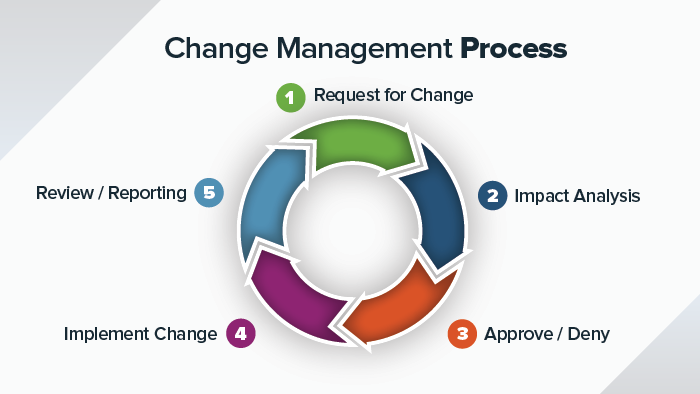
An organization may have to change its strategy. This may be forced upon changes in its environment or it may be a deliberate attempt to do things such as placing the organization in a new competitive position(María Jesús González González,2015). The strategic orientation of a company’s management enables their activation and the implementation of changes supporting the achievement of its long-term development objectives(Jan Skalik,2016). Change can be classified by the extent of the change required, and the speed with which the change is to be achieved. One type of change is a revolution which involves a rapid and fundamental change within an organization.It may follow a period of strategic flux and the organization is likely to be facing extreme external pressure for change.Many new initiatives are likely to be launched simultaneously in order to reverse the organization’s direction.

Impacts of Brexit on Tesco

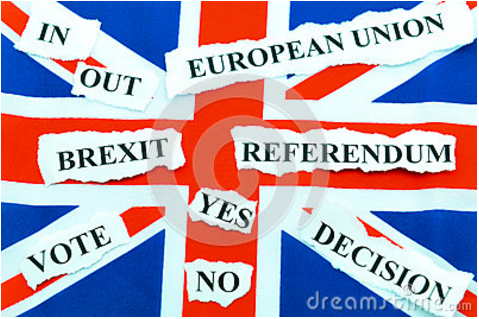
Tesco is currently the UK’s leading retailer and ranks among the top three retailers in the world. The uncertainty of Brexit brings both opportunities and threats to Tesco. Because the EU has a strong and sustainable food supply capacity, it is the EU Group advantage of member states. Brexit will directly break this long-term business relationship. The UK food supply is not enough and the food trade has a long-term deficit. EU member states are the main trade targets for UK food import and export. Once the UK leaves the European Union, Tesco’s supply chain will bear the brunt. But on the other hand, imported food prices have risen markedly because of the weaker pound prices after the Brexit referendum. In addition, the UK inflation rate has reached a five-year high, many residents in the UK are frantically hoarding food, which directly led to the rise in the retail price of Tesco food.

The negative impacts of Brexit on Tesco include the following. The first is purchase issues in the supply chain. After the Brexit, the EU may limit UK raw material purchases and increase basic tariffs. (the Guardian, 2019)Secondly, Brexit will bring serious and complicated economic consequences, affecting shoppers’ expectations, confidence and demand. The UK IGD survey report shows that UK shoppers are cautiously spending. Next, British shoppers tend to choose a shopping experience with a wide range of supply capabilities. To achieve this kind of shopping experience, it cannot do without massive imported goods from the EU, especially agricultural products. Exiting any single market in the EU may affect the merchandise supply capacity of the store. Finally, the EU always attaches much importance to food safety. The UK’s food safety regulatory system is also relatively strong and can handle some unforeseeable situations. However, once leaving the EU, the UK must revisit its food safety issues.

Solutions to overcome the identified problems

To overcome uncertain external risks of breaking away from Europe, Tesco should temporarily adopt less risky measures to maintain and expand its existing market share after taking into account the painful lessons learned from the failure of opening up the Chinese market. (Yoder, Visich and Rustambekov, 2019)Also, Tesco was delisted in the United States due to the continuing downturn in sales performance. For Tesco at this time, a more long-term strategy is market penetration strategy rather than simply laying off staff and reducing labor costs. While other retailers increase their prices, Tesco will effectively expand their existing market share if it can offer consumers homogeneous or even better quality goods at a lower price than its competitors.

Action plan and approaches to overcoming resistance

Successful change is achieved through strong leadership. Kotter and Schlesinger set out several change approaches to deal with resistance. One of them is education and communication. This approach relies upon the hopeful belief that communication about the benefits of change to employees will result in their acceptance of the need to exercise the changes necessary(Kfknowledgebank.kaplan.co.uk, 2019). The acquisition of Booker Group Plc is helpful to achieve economies of scale. On the one hand, it can reduce purchase costs. And to a certain extent, it can make up for the economic burden of reducing layoffs to the company. On the other hand, after the acquisition of companies, because of the expansion of enterprise management scale, the demand for talent will also reduce the scope of layoffs. Tesco’s leaders can ease employees’ fear of unemployment by effectively communicating with employees. And it will largely solve the problem of resistance.

outcomes

The supply chain is always the lifeblood of the enterprise of the retail industry. Faced with negative circumstances purchase blocked, sales may be affected greatly. The way to maintain a competitive advantage is management changing. Blindly reducing labor costs can only bring short-term benefits to enterprises. When faced with the uncertain economic situation, business leader styles need to be changed from power to communication and pay attention to the satisfaction of consumers and employees. WIth the process of management change, firms adopting a market penetration strategy may bear the spread of cost more easily and win customers away from rivals.

the Guardian. (2019). EU referendum: how would Brexit change VAT and import duties?. [online] Available at: https://www.theguardian.com/small-business-network/2016/mar/22/eu-referendum-brexit-change-vat-import-duties [Accessed 29 Apr. 2019].

Yoder, S., Visich, J. and Rustambekov, E. (2019). Lessons learned from international expansion failures and successes.

Kfknowledgebank.kaplan.co.uk. (2019). [online] Available at: http://kfknowledgebank.kaplan.co.uk/KFKB/Wiki%20Pages/Managing%20strategic%20change.aspx [Accessed 29 Apr. 2019].

Contemporary Leadership Styles: How relevant are they in today’s changing world?(737)

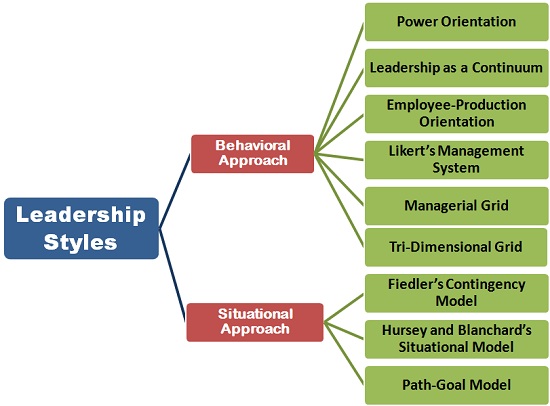
Psychologist Kurt Lewin developed his leadership theory framework in the 1930s, which contains three major leadership theories(Mindtools.com, 2019). The first is the autocratic leader, whose leadership style is very aggressive. The leader usually makes his own decisions without consulting other team members, even if their opinions are reasonable. The benefit of this style of leadership is that decisions can be made quickly, when the situation calls for it, and when the team’s opinions are not aligned with the underlying goals. The disadvantage is that this style is very autocratic, easy to demolish the enthusiasm of employees. The second is democratic leaders, who tend to make decisions with their team members in mind, want employees to participate in the decision-making of projects, and encourage employees to participate actively. The advantage of this kind of leadership style is that it is a good practice and exercise for employees, so it can improve their enthusiasm and enhance their teamwork ability. The disadvantage is that when the decision needs to be made in a short time, the long time and tedious process may delay the project. Third, laissez-faire leaders give more freedom to their employees. Even about the start and end time of work, they let employees make their own decisions and give them much support and help. This kind of leadership style pays more attention to the self-improvement of employees, and the advantage is that it can improve more job satisfaction and enable employees to complete the work according to their own wishes to the greatest extent. The disadvantage is that this leadership style will lead to a lot of uncertainty. If employees do not have a good grasp of time or some lack of work skills and experience, it will eventually lead to the failure of the project, which is a very big threat.

Main leadership issues in a changing world

Feedback from employees is crucial. In the retail industry, customer satisfaction is a major measure. If an employee communicates with customers in an unprofessional way for a long time, it will lead to some potential problems. It is possible that this kind of problem will not show up in the performance of employees, but if the leader discovers the problem very late, the problem will last longer. Leaders should prepare time for the team. As we all know, leaders are not only responsible for managing the team, but also have their own work to do. If the leader is caught in his own work time in the first time, it will lead to the team members do not know what to do, do not know how to get the support and help should be. Leaders should put the team first, prepare their own schedule to give support and help to the problems of the team, walk around the team frequently, take the initiative to understand the needs of the team and maintain good contact with the team. Leaders should not be too friendly, although most people prefer approachable leaders, which makes employees like the leader more and work hard to get the job done. However, there are still many difficult decisions to be made in a team. Being too approachable will make employees want to take advantage of this situation to pursue their own interests, and there will be more complicated problems in making decisions. However, this does not mean that the leader does not need to have a good relationship with employees. What the leader should do is to find a good position among friends and superiors and subordinates and set a clear boundary, which can encourage employees to finish their work efficiently and prevent them from taking advantage of this relationship.

Contemporary leadership styles

In the current business context that is featured in challenges, opportunities, and uncertainties, leaders need to pay sufficient attention to the importance of assessing the nature of their businesses and the optimal solutions to identified and potential problems in management (Lipmanblumen, 2018). Due to the current development trend of the global economy, the leadership style should be diversified and not limited to a specific leadership style. Leaders should balance the leadership style with high eq and responsibility for team and project. In future discussions on leadership styles, there will be more discussions on a leadership style that can integrate the actual situation and be flexible. This leadership style is called transformational leadership, which will be explained in detail in my third blog.

Lipmanblumen, J. (2018). Connective leadership:. Change the Magazine of Higher Learning, 30(1), 49-53.

Mindtools.com. (2019). Leadership StylesChoosing the Right Approach for the Situation. [online] Available at: https://www.mindtools.com/pages/article/newLDR_84.htm [Accessed 28 Apr. 2019].

Can cultures be managed within organizations?(736)

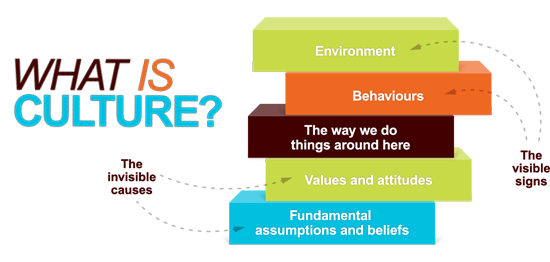
Corporate culture refers to the beliefs and behaviors that determine how employees and management interact with each other. At the same time, it is affected by local traditions, national culture, economic environment, and other external factors. No matter how corporate culture develops and progresses, it is the core of the enterprise and affects the strategy and practice of all aspects of the enterprise. (Investopedia, 2019)

Challenges in culture changes in the retail industry

For the retail industry, it is a typical example to illustrate the corporate culture, because it is working mode can clearly show a company’s various coping methods in the large economic environment. For example, the cultural differences caused by geographical location, the high labor intensity of employees, the reduction of staff to cope with economic obstacles, and the balance of customer service. These are the cultural challenges that retail can face. (CultureIQ, 2019) As you can imagine, it is very difficult to make cultural changes in a large enterprise. When a strategy begins to be implemented, it is necessary to start from the initial plan formulation, complete each stage and finally complete a strategic goal. There will be a lot of employees and leaders in the company who are not willing to make changes because it will cause them to change their working mode. Employees will observe various threats and unfair things to themselves, so when implementing a change strategy, they need to take these issues into consideration from the very beginning, and supervise and implement them.

Tesco faces challenges in cultural change

Its success is due to the company’s successful expansion strategy, its core competitiveness is it is brand reputation and brand experience of value-added services. (UKEssays.com, 2019)Tesco’s strategy puts more emphasis on human resources and makes a comprehensive investment in it. Tesco by Maslow’s hierarchy of needs of employees on the incentive plan, the purpose is to meet the demand of employees in the most level, such as providing basic salary compensation, and locker room facilities and health security pension, more and more is also planning the development plan for employees to focus on the employee’s personal skills as well as the progress in the work life.(docshare.tips, 2019)In 1990, Tesco decided to make cultural changes to “improve the responsiveness of the whole organization”.However, when looking for hr consultants, it is found that the term “cultural change” has the risk of failure, because the concept range of the term is so wide that it is difficult for stakeholders to understand the specific meaning. Later, Tesco changed the word to “customer service”, because the word has a specific point of reference. Tesco is also a large customer-oriented company, focusing on the external environment. They believe that in order to achieve change, it needs to be oriented by clear goals. Tesco found the lack of professionalism of its store managers in the process of the preliminary investigation. Subsequently, Tesco decided to review its management practices to improve customer satisfaction and launched a store management development project. After that, the company began to transform the whole organization into a professional and customer-oriented culture. (UKEssays.com, 2019)

Tesco strategies of managing culture

First of all, seriousness is a core word for a company, because for a company to manage the organizational culture, it must be serious to control from beginning to end, real reform cannot be completed overnight, it needs time and commitment. Senior managers need to communicate with employees of the company in order to find out the real internal situation of the company and avoid false information and materials to influence the decision. Companies should also pay attention to the management of culture when handing out rewards. For example, employees should not only rely on their results as a reference but also do things in a way that meets the requirements, so as to avoid cheating by hook or by crook. (Retail Week, 2019)

Cultures can be managed

In general, the organizational culture within a company can be managed. First, it needs leaders to lead by example, because leadership is a process of influencing others, and employees will imitate their leaders. For the retail industry, especially Tesco, the management of a huge corporate culture needs to start from the inside, which requires the comprehensive thinking ability and innovative thinking of decision-makers. In the process of change and management, attention should be paid to the relationship between variables, such as the behavior of employees and rewards.

UKEssays.com. (2019). The strategic and cultural change at Tesco. [online] Available at: https://www.ukessays.com/essays/business/study-to-analyze-the-improving-work-standards-at-tesco-business-essay.php [Accessed 27 Apr. 2019].

Retail Week. (2019). Analysis: Seven ways to change company culture following Tesco crisis. [online] Available at: https://www.retail-week.com/grocery/analysis-seven-ways-to-change-company-culture-following-tesco-crisis/5064669.article?authent=1 [Accessed 27 Apr. 2019].

docshare.tips. (2019). 5iq6i.the.30.Day.mba – docshare.tips. [online] Available at: http://docshare.tips/5iq6ithe30daymba_57490c4db6d87f860b8b4d57.html [Accessed 27 Apr. 2019].

UKEssays.com. (2019). The strategic and cultural change at Tesco. [online] Available at: https://www.ukessays.com/essays/business/study-to-analyze-the-improving-work-standards-at-tesco-business-essay.php [Accessed 27 Apr. 2019].

Investopedia. (2019). How to Tell If Your Corporate Culture Is Healthy. [online] Available at: https://www.investopedia.com/terms/c/corporate-culture.asp [Accessed 27 Apr. 2019].

CultureIQ. (2019). Company Culture in the Retail Industry: Troubleshooting Your Top 4 Challenges – CultureIQ. [online] Available at: https://cultureiq.com/blog/company-culture-retail-industry/ [Accessed 27 Apr. 2019].

Blog 4: My development as a future leader

Under the challenging and changing business environment, to develop into a capable leader, people need to work out practical personal development plans (Daniel, 2010). I have long been targeting at continuously improving my own capabilities in management and decision making in the business context. I would make a variety of useful preparations for reaching such a goal in my career development and personal development processes.

My preferred leadership brand and evaluation

I hope to develop into a capable manager in the banking industry. Among the varying leadership styles, I prefer to democratic leadership style. Democratic leadership enables the leader to make the best of the capabilities of subordinates by inspiring them to actively take part in the decision making and problem-solving processes in work (Wood and Barker, 2011). The leader would emphasize on the contribution to be made by each of the members by finding out optimal solutions of matching them with the corresponding work tasks in allocation of work. Through effective communication between the leader and the subordinates, democratic leadership style will help reduce the possible disputes within the management group and the workers in the organization or work teams.

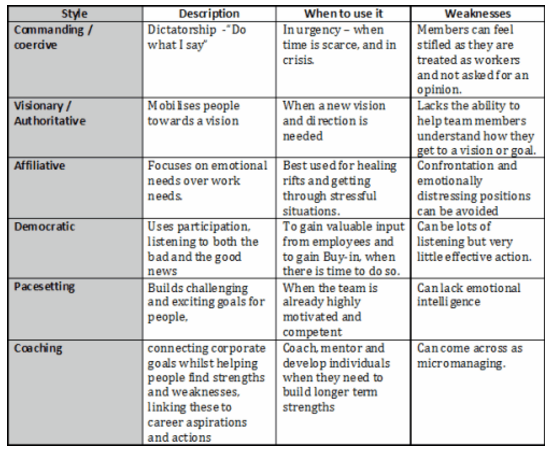
Compared with another leadership style that is opposite to it in a sense, namely coercive leadership, which excessively emphasizes on the power distance or the authority of the leader, democratic leadership may prove to be more effective when the leader is not sure about working out the optimal strategies or plans to reach the best business performance in reality competitive processes (Anderson, 2011). Compared with still another leadership style, namely pacesetting, which is mainly applied when the group is highly motivated although, democratic leadership can prove to be more adaptable in varying contexts in the workforce. For example, when there is high level of staff turnover or there is a short history in the business development of an organization, it may be improper for the pacesetting leadership style to be applied in reality competitive processes. The democratic leadership style may prove to be more practical and effective in enhancing the work enthusiasm of employees too. The work performance and business performance can thus be improved accordingly.

Current strengths and development needs

At present, I have three main strengths. One is that I am good at communicating with people with appropriate skills. I am sociable in character and prepared for exchanging ideas with others. I have been noticing the importance of selection of expressions in communication with others for preset purposes. That will help me find more suitable measures to approach my communicative goals when working as a manager in the banking industry sector. In addition, I have a good command of the various sorts of theories and concepts relating to management and some professional skills about banking, such as statistics calculation, financial terms and management approaches.

However, I have few experiences of working in reality business world. In addition to that, I do not have a good memory, which would prevent me from quickly coming up with accurate judgements in making important decisions based on some basic information or messages relating to my work, such as accounting and investment plans. I will try to seek more opportunities of practicing what is learnt in class and from books in work in reality workplaces. What is more, I will try to make up for my poor memory by taking notes on more occasions if possible. By way of practicing more in using all sorts of skills and knowledge relating to my desired job in the future, namely manager in the banking industry sector, I believe more progresses will be made on my way of career development and personal development.

Requirements for being a good would-be leader

To successfully develop into a capable leader, apart from a variety of skills, such as communication skills and professional skills, students need to be prepared with sufficient skills of leading the followers on the way to continuous and desirable progresses in work (Kaminski et al., 2013). There may be defects in individual employees included in the work team of an organization. While working as a leader, people need to try to timely and accurately identify the problems facing them, so as to work out practical countermeasures for making improvements in management processes.

To be a good leader in the future, I will try to learn more professional and useful skills about banking businesses. That will be an important basis for me to succeed in helping my followers find out effective solutions to problems facing them in work. In addition, I will try to apply different leadership styles when leading or inspiring different workers in a same work team or under varying management contexts. I will notice the appropriateness of my selected strategies and solutions to be used to deal with the problems facing me.

References

Anderson, K. (2011). Reluctant leaders: why are some capable leaders not interested in the principalship?. International Journal of Management in Education, 5(4), 384-400.

Daniel, R. (2010). Excellent leaders do better than fixing problems—they foresee them. Journal of Psychological Issues in Organizational Culture, 1(2), 90-93.

Kaminski, G. M., Britto, M. T., Schoettker, P. J., Farber, S. L., Muething, S., & Kotagal, U. R. (2013). Developing capable quality improvement leaders. Postgraduate Medical Journal, 89(1048), 78-86.

Wood, R., & Barker, P. (2011). Developing key leaders to manage complex programs. Journal of management and entrepreneurship, 44(3), 201-220.

Blog 3: Change management


Change management proves to be of great impacts on the actual business performance or management efficiency to be reached on the contemporary business world (Levasseur, 2014). When there are changes to the internal or external environment facing an organization, it is more likely for the leaders to be in need of making corresponding changes to their own strategies, either about management or business development solutions, so as to make the best of internal resources available to them and the opportunities observed from the marketplace. With proper change management solutions, leaders tend to positively respond to the challenges and threats facing them on the way to desirable business successes of work performance in the chosen industry sector and selected business domains as well.

(Levasseur, 2014)

Impacts of Brexit on British Airways

British Airways is an influential firm in the airway transportation industry sector in the UK (Aladwani, 2011). It targets as passengers in need of travelling between varying main cities in different countries of the world and those in the UK. Brexit is with important impacts on the strategies and effectiveness of operations practices conducted by the organization in its process of competing with other business players in the target market. First of all, British Airways has been facing the problem of decreasing numbers of passengers, especially customers on businesses, who travel between other parts of Europe and the UK. Brexit removes a variety of businesses operated in the UK and the other European countries who are the members of the European Union, or they are decreasing their business scales because of the barriers caused by Brexit for their international businesses operated across UK and other parts of Europe (Macgregor and Höpfl, 2018). In addition to that, British Airways is enjoying decreasing threat from other potential investors in the airway transportation industry sector in the UK as well.

(Macgregor and Höpfl, 2018)

Due to the negative impacts of Brexit, fewer potential investors would consider entering or enlarging investments in the airway industry sector in the UK, especially when it comes to the flights between the UK and other members of the European Union. However, British Airways is enjoying more opportunities of seeking cooperative relationships with business players from other countries in other areas of the world. That is because of the need for the UK to seek alternative business partners to make up for the loss of international trading with the European Union after the Brexit.

Their responses to identified impacts

To positively respond to the identified impacts of Brexit, British Airways has been emphasizing on the effectiveness of seeking alternative markets to retain its business performance and sales revenue in the airline industry sector. The customers from some emerging economies, such as India, Brazil and China, are paid with special attention in the renewed marketing strategies of British Airways in 2018 (Waterhouse and Flynn, 2018). That is based on the expectation of improving the sustainable competitiveness and market position of the organization in the global context in a sense. What is more, the organization has also been trying to improve its sustainable competitiveness advantages over competitors by way of enhancing awareness of importance of respecting cultural diversity in management as well as in service delivery. That helps it deliver more satisfactory services for customers from varying cultural backgrounds. The employee cohesion is thus enhanced to a certain extent as well.

Assessment of plan as responses

The strategies applied by the organization in responding to the negative impacts as well as positive impacts caused by Brexit in its own business development processes can be regarded to be of high level of feasibility. Although there are more uncertainties in the consumption trends of customers and the requirements of employees, the emphasis laid by leaders of British Airways on diversity can be regarded to be of great assistance to its competitiveness. Customers with varying needs and wants may expect to receive more satisfactory services from an organization notice diversity management (Aladwani, 2011). Its customer loyal can be further improved in a sense. It is the same case with its human resources management efficiency.

Airline firms may effectively respond to the need for change management

Firms in the airline industry sector may expect to effectively respond to their need for change management tasks facing them under the current changing business environment (Brown, 2015). They may expect to work out and apply effective and reliable strategies in change management processes by way of making improvements to their solutions used to deal with threats and barriers facing them. In the meanwhile, by targeting at larger target segments under the challenging contexts, they may expect to gain more useful managerial experiences in expansion processes as well.

References

Aladwani, A. M. (2011). Change management strategies for successful erp implementation. Business Process Management Journal, 7(3), 266-275.

Brown, R. T. (2015). Organisational change management: a critical review. Journal of Change Management, 5(4), 369-380.

Levasseur, R. E. (2014). People skills: change management tools: the modern leadership model. Interfaces, 34(2), 147-148.

Macgregor, C., & Höpfl, H. (2018). A commitment to change: strategic management in british airways. Disaster Prevention & Management, 2(2), 31-45.

Price, A. D. F., & Chahal, K. (2016). A strategic framework for change management. Construction Management & Economics, 24(3), 237-251.

Waterhouse, J., & Flynn, C. (2013). Change management practices: is a hybrid model a better alternative for public sector agencies?. International Journal of Public Sector Management, 16(3), 230-230.

Blog 2: Contemporary Leadership Styles: How relevant are they in today’s changing world?

Leadership styles are about the collection of tendencies of behaviours and ways of thinking presented by leaders in their processes of leading their subordinates to expected performance in the workplace. There are different leadership styles, such as coercive, affiliative, democratic, pacesetting and coaching . They vary a lot in terms of the ways in which the involved leaders try to reach expected managerial performance (Zanecchia, 2015). That would be reflected from the concrete interactive relationships to be established between the leader and the followers in the managerial processes or work processes as well. For example, in the coercive leadership style, leaders tend to emphasize on dictatorship while in democratic leadership style, leaders would expect to listen to both good and bad ideas or comments from the followers who are expected to be more active in making contributions to shared goals in work (Zareen et al., 2015). To reach optimal work performance, leaders may be facing the task of deciding on most effective and appropriate methods of motivating and influencing the followers.

(Zanecchia, 2015)

Main leadership issues in a changing world

While operating their businesses, leaders in the banking industry sector are faced with the task of deciding on appropriate and reliable management strategies and plans to respond to the barriers or opportunities observed in the target market (Iglesias, 2017). Despite that, they are likely to be facing some important issues in designing and implementing their concrete leadership strategies, especially when it comes to the aspect of leadership styles to be adopted. First of all, leaders in the banking industry sector in the contemporary business world would be facing high level of requirement for flexible thinking to be applied in deciding on more effective strategies or plans. That is due to the high level of possibility for diversified human resources to be included in their organization or work team. It would be difficult for optimal management efficiency to be reached by applying a single leadership style in reality. What is more, they are likely to be facing the issue of unwillingness for some subordinates to cooperate with each other in the implementation of the strategies plans used in managerial practices (Macbeath, 2016). Leaders would have difficulties in reaching optimal performance when they fail to make feasible plans for positively respond to the possibly challenging management contexts facing them in reality. Apart from that, the uncertainties in the external environment can lead to barriers for leaders to decide on more appropriate strategies with respect to leadership styles. The employees recruited from the external labour market may have been used to certain leadership styles and a different leadership style can result in challenges for optimal performance to be reached when they work for the organization.

Possible changes about contemporary leadership styles

In the contemporary banking industry sector, as is the case in many other industry sectors, leaders are faced with the possibility of facing more complicated and uncertain situations while trying to reach desirable management efficiency (Evans, 2010). It would be a challenging task for leaders failing to decide on the most effective and appropriate leadership style to make the best of their human resources in reality management processes. The leaders are likely to be facing a group of subordinates from varying backgrounds or cultural contexts, indicating high level of cultural diversity or cross-cultural context. What is more, in contemporary leadership style studies, it is possible for more attention to be paid to the research into the effective measures of dealing with bias between genders. At present, females in the global context are found to be suffering from unfair treatment in the workforce on the whole (Reunanen and Kaitonen, 2017). That is believed to be an important barrier for exploring optimal human resources in the business world under the current and future contexts. What is more, it is possible for more attention to be paid to the studies into more reliable solutions to the problems of barriers for optimal management efficiency to be reached. The globalization will thus have more positive impacts on sustainable development in the global context.

Contemporary leadership styles under the current changing world

In the current business context that is featured in challenges, opportunities and uncertainties, leaders need to pay sufficient attention to the importance of assessing the nature of their businesses and the optimal solutions to identified and potential problems in management (Lipmanblumen, 2018). Or else, it would be difficult for them to reach pleasing management outcomes. Comprehensive thinking and flexible thinking would be of great impacts on the concrete leadership style to be adopted or presented by a leader in reality management processes then.

References

Evans, D. (2010). The changing face of leadership: different styles of leadership facilitate changing needs in healthcare, politics and industry. Strategic Direction, 26(1), 21 – 23.

Iglesias, J. L. C. (2017). Practical situation in leadership style change. Ssrn Electronic Journal, 88(2), 41-52.

Lipmanblumen, J. (2018). Connective leadership:. Change the Magazine of Higher Learning, 30(1), 49-53.

Macbeath, J. (2016). Leadership in a changing world. American Journal of Pharmaceutical Education, 71(6), 223-250.

Reunanen, T., & Kaitonen, J. (2017). Different Roles in Leadership Styles in Modern Organization.  Journal of Business Management, Training and Education, 59 (3), 109-121.

Zanecchia, M. D. (2015). Experiential learning and changing leadership style. Journal of Nursing Education, 24(9), 360.

Zareen, M., Razzaq, K., & Mujtaba, B. G. (2015). Impact of transactional, transformational and laissez-faire leadership styles on motivation: a quantitative study of banking employees in pakistan. Public Organization Review, 15(4), 531-549.

Blog 1: Can cultures be managed within organizations?

Corporate culture has long been regarded to be of critical importance to the development of organizations in different industry sectors (Oertig and Buergi, 2016). It is especially the case when it comes to the influences of the concrete culture shared among an organization on the management efficiency and work performance of employees included in different departments of the organization while competing with other business rivals in the marketplace that is filled with all sorts of barriers to desirable successes. Despite that, compared with many aspects of management in an organization in the business world, corporate culture is viewed as to be more intangible in a sense, especially in terms of its formation and evolution processes.

Challenges in culture changes in retail industry

In the process of making changes to their corporate cultures, business players in the retailing industry sector, especially chain stores, tend to be facing a variety of challenges on the way to expected successes (Smith, 2012). For retail businesses, they are likely to be facing such main challenges in their culture change processes as resistance from existing members, lack of innovative thinking, cross-cultural management barriers and contradiction between different interest groups within the organization.

(Devine et al., 2017)

Some leaders and workers in a retailing business tend to be reluctant in accepting or supporting changes of cultures or relevant management solutions to be implemented. That may be due to their worries about harms to be observed or great efforts needed for them to re-adjust to the new work environment they are in. Without sufficient attention paid to innovative thinking, managers in a retailing business would find it difficult to create or implement practical change management solutions relating to their corporate culture. That would involve a variety of factors relating to the resources or capabilities, as well as environments facing the organization. When members from varying cultural backgrounds work in an organization in the retailing industry sector, as is the case in many other industry sectors, it would be a challenging task for practical or feasible solutions or plans to be used in exploring optimal potentials of all members (Devine et al., 2017). That makes a critical source of barriers in effective cultural change management practices. The varying concerns or contradiction between interest groups within an organization can lead to disputes or conflicts between them, thus causing barriers to culture change practices as well.

Principal challenges facing Tesco in its cultural changes

While operating its businesses in the British market, Tesco has been enjoying outstanding successes by way of making good use of its capable management talents in the past stages of its business development (Barbosa and Cardoso, 2018). However, under the recent changing contexts, in terms of economy and politics, especially those relating to the Brexit, the organization has been facing great barriers on the way to desirable business performance. It is in need of making adjustments or improvements to its corporate culture to positively respond to the plight facing it. The principal challenges facing it in changing its culture in management practices mainly relate to the reluctance of some senior managerial personnel who prefer to rely on their past management experiences in decision making and implementation of plans on varying occasions. In addition to that, it is reported that the organization is also facing the problem of lack of attention paid by the top management group in application of innovative thinking in reality management processes. The marketing strategies adopted in the organization are regarded to be ineffective in helping it positively and timely respond to the uncertainties and changing trends in the target market.

(Barbosa and Cardoso, 2018)

Strategies of managing cultures

To achieve desirable successes in the future, the organization has been paying special attention to talent retention and development, as well as innovative thinking to be applied in key areas of operations practices. The advertising programs used in the organization are featured in higher level of attractiveness and diversity when compared with that in the previous stages (Toit, 2018). More motivational measures, such as awards for novel designs in management or product development, and unconventional solutions to the same problems are encouraged by the senior management for reaching greater successes in changing its culture for improving competitiveness.

Cultures can be managed

On the whole, cultures in organizations in the retailing industry sector can be managed. That would require high level of comprehensive thinking and innovative thinking on the part of the decision makers though. The relationships between varying variables or groups involving the culture change management processes should be considered systematically to reach optimal successes.

References

Barbosa, I., & Cardoso, C. (2018). Managing diversity in current organizations: a challenge to organizational culture. New Perspectives in Management Review, 22(22), 274-288.

Devine, F., Baum, T., Hearns, N., & Devine, A. (2017). Managing cultural diversity: opportunities and challenges for northern ireland hoteliers. International Journal of Contemporary Hospitality Management, 19(2), 120-132.

Oertig, M., & Buergi, T. (2016). The challenges of managing cross-cultural virtual project teams. Team Performance Management, 12(1/2), 23-30.

Smith, M. E. (2012). The importance and challenge of managing the business culture. Sage Publications.

Toit, C. M. D. (2018). Transforming and managing the organisational culture of modern firms to meet the challenges of a changing environment. South African Journal of Higher Education, 10, 96-104.